Painting in watercolors is both extremely frustrating and extremely rewarding, and usually for the same reason... that little bit of chaos that makes the finished product unpredictable. But anyone who has marveled at a Winslow Homer or Sargent watercolor knows the allure.
One of watercolors chief appeals is its immediacy as a medium. Visually stunning and fast, which makes them great for travel and quick sketches. Enter the watercolor sketchbook. At home in the studio it's great to work with a 300lb 22x30 paper you just soaked in the tub for some adventurous wet in wet compositions. But when out and about you need a sketching journal. Something practical, that does its job with out getting in the way.
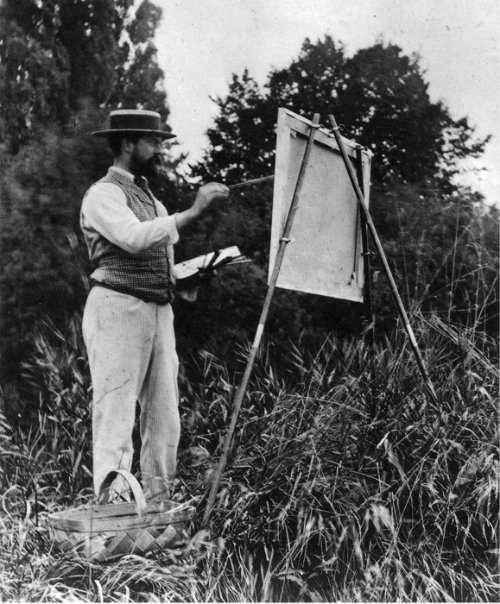
While it's great, if you have all day, to really set up your kit and dig in, the way the impressionist did of old. Most times we have shorter time window or we're painting in a public space thats just not conducive to moving in our whole studio:)
So whether you’ve just decided to try your hand at watercolor painting for your next trip or you’re an experienced watercolor artist who’s filled up their previous sketchbook, lets talk about the products!
If you’re in a hurry, here's my #1 top pick:
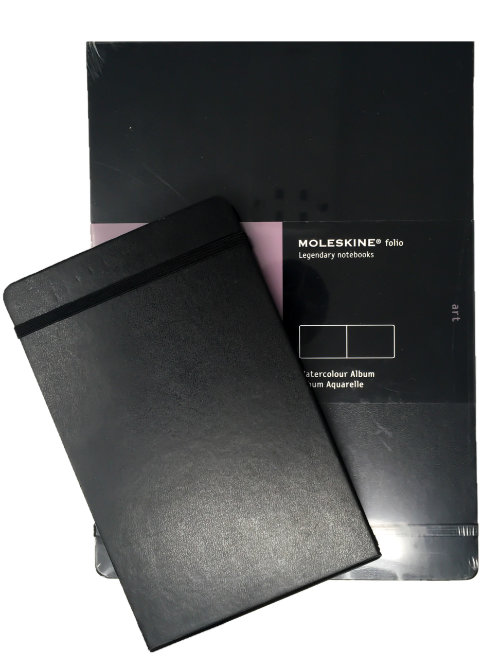
Moleskine Art Watercolor Album
- Durable leather-look cover
- 72 pages
- 200 gsm paper
- Acid-free
- Cold-pressed
- Elastic fastening
- Travel-sized
- Suitable for multiple media
- Includes bookmark
Top Watercolor Sketchbooks
OUR TOP PICK
Moleskine Watercolor Hard Cover Sketchbook 5" x 8.25"
EDITORS CHOICE
Moleskine Watercolor Hard Cover Sketchbook 8.25"x11.75"
BEST VALUE
Arteza 3 Pack Watercolor Sketchbooks 5.1"x8.3"
OUR TOP PICK
Moleskine Watercolor Hard Cover Sketchbook 5" x 8.25"
Moleskine surely needs no introduction as one of the world’s leading high-quality notebook manufacturers, but the Moleskine Art Watercolor Album surpassed all our expectations!
This watercolor sketchbook features 72 200 gsm pages, contained within a durable, leather-look cover.
The paper, which is also cold-pressed and acid-free, is thick and absorbent enough to handle watercolor painting and inkwork, but it’ll also work perfectly for virtually any other medium.
Because the pages are acid-free, any artwork you create on them will retain its color and vibrancy for many years.
The leather-look cover, meanwhile, will keep all your artwork safe inside the sketchbook with the help of the elastic closure which keeps the notebook securely closed when it’s not in use.
A ribbon bookmark is also sewn into the notebook so you can always find your next page quickly and efficiently.
The Moleskin watercolor album is travel-sized at 5 x 82.5 inches, so it’s easy to carry around for whatever inspiration strikes and the smaller pages are suited to quick watercolor sketches.
Pros:
- 72 pages
- Durable cover
- Elastic closure
- 200 gsm paper
- Cold-pressed
- Acid-free
- Travel-sized
- Multipurpose
- Bookmark included
Cons:
- Awkward to paint on the backside of pages when in the field
EDITORS CHOICE
Moleskine Watercolor Hard Cover Sketchbook 8.25"x11.75"
Well if your thinking 'whats up? this is the same sketchbook just bigger!' What can I say, my honest pick as a number 2 really is just the same Moleskine - just bigger:)
All the sizes are perforated if you hit on jewel you decide to frame. This bigger one is sized so that it's still travel friendly but big enough for a more developed piece.
I own 6 or 7 of the little ones and at least 2 of the bigger ones. I even usually keep a brand new one on the shelf as a spare. So, yeah, I'm a fan. You should give one a try if you haven't.
Pros:
- 60 pages
- Durable cover
- Elastic closure
- 200 gsm paper
- Cold-pressed
- Acid-free
- Travel-sized
- Multipurpose
- Bookmark included
Cons:
- Bigger one is even more awkward to paint on the backside of pages on your lap sitting on a bench. But if your left handed that just might be your favorite side:)
BEST VALUE
Arteza 3 Pack Watercolor Sketchbooks 5.1"x8.3"
Pros
- Value Pack - Three!
- High page count
- Same great hardcover and elastic design as a Moleskine
- Thick paper at 230 gsm
- Natural Linen Bound Cover
Cons
- Even though the paper is thicker, its a lesser quality than what's found in a Moleskine and may be problematic for some techniques
RUNNER UP
Paul Rubens Watercolor Paper Block
So, I'm not usually a fan of watercolor blocks for travel, I like to turn my pages not rip them out:) But I must admit, this really is a nice little travel sketchbook for watercolors.
If you like to get your paper wet and soggy and really put it through a work out, then this ones for you!
The 20 sheets of 300 gsm hot-pressed paper are very smooth, so your watercolors will glide smoothly over the page. Being on the higher gsm side for sketchbooks, that and being block bound, means you can really drench this paper!
On the downside I hope you like hot-pressed because the don't offer any cold pressed blocks. However, the paper is very high-quality 100% cotton, Italian made and acid-free.
Perhaps the best and worst feature of this Paul Rubens is its ‘paper block’ style. ‘Paper block’ means that all of the pages are essentially glued together to prevent buckling and warping when working with water-based media. Blocks are the most buckle proof papers you'll find. But there's no turning the page or starting more than one sketch at a time. It's finish up one, rip it out, and start another.
This watercolor sketchbook also features an attractive leather cover with an elastic closure so you can keep your artwork safe, protected, and private when you’re not actively working on it.
You can purchase this watercolor sketchbook in either black or pink, so whether your personal style is classic or more vibrant, you’ll find a Paul Rubens watercolor paper block to match.
The 7.68 x 5.31-inch size is also perfect for quick sketches as well as travel.
Pros:
- Portable
- Paper-block style
- Multipurpose
- Leather cover
- Elastic closure
- 100% cotton 300 gsm paper
- Acid-free
- 2 color options
Cons:
- Not a true sketchbook, and the beautiful cover is worthless after you pull all the pages out.
RUNNER UP
Canson XL Series Watercolor
So Canson’s XL watercolor pad is a not a sketchbook, but a sketch pad. This is an important distinction for many, myself included.
But Canson is huge name in watercolor paper, and the XL is no exception (4.8 start rating with 25,260 reviews in pretty incredible!). Rarely to you get top quality and top value in the same package.
The nice thing about pads, and especially the ring binding, is the lay flat design and the comfort of working both sides of the paper with ease.
Featuring 30 sheets of cold-pressed, 300 gsm textured paper, the Canson XL watercolor sketchbook provides 60 total sides of heavy-duty paper to practice your watercolors on!
The paper is also acid-free, so your artwork’s pigmentation will stand the test of time.
Although this pad sketchbook is primarily for watercolor, it's still great for other multimedia where you'd like some thicker paper (eg: pen and ink washes, acrylic, ect...)
Canson offers this watercolor pad in a variety of sizes, including side wire pads in 9 x 12 inches and 7 x 10 inches, and foldover options in other sizes.
One reason the Canson XL watercolor pad is so popular is that, for the quality and quantity of the paper, it’s very affordable. This makes it an ideal first watercolor sketchbook for beginners looking to try out the art form, or those working around a budget.
A word of caution: while this paper is high-quality and suitable for watercolors, it’s likely to curl when multiple layers of water are applied to the page.
For those artists who really like they're wet in wet techniques, this might not be the best fit.
Pros:
- Multipurpose
- Several sizes available
- Cold-pressed
- 300 gsm paper
- Acid-free
- Affordable
Cons:
- Not suitable for multiple water layers
RUNNER UP
Bellofy 50 Sheet Watercolor Paper Pad
Bellofy undoubtedly manufactures some of the best art paper supplies on the market, as exemplified by this watercolor paper pad.
With 50 sheets of paper, you can count on the fact that you won’t need to think about replacing your watercolor sketchbook any time soon, and because this pad is larger (9 x 12) than classic, small watercolor sketchbooks, you have plenty of space on each page for your creations!
The paper is 190 gsm and coldpressed, so it’s moderately thick and absorbent. This means you can go to town with your water, but you can let loose a bit without worrying about soaking through or tearing the pages.
Additionally, the paper is acid-free, so colors will fade less quickly than on regular paper.
However, this pad isn’t just perfect for watercolors - it’s also ideal for any other medium you might want to work in!
Whether your work is exclusively watercolor-based or interspersed with other mediums, you’ll get good use out of this sketchbook!
Tthe Bellofy watercolor paper pad is that it’s glue-bound, so not a true sketchbook. But this means that if you need to take a page out for whatever reason, you can do so effortlessly without damaging the structure of the pad.
Pros:
- 50 sheets
- 190 gsm paper
- Cold-pressed
- Acid-free
- Glue-bound
- Multipurpose
Cons:
- Not professional quality
RUNNER UP
Strathmore 460-55 400 Series Visual Watercolor Journal
Finally, if you’re accustomed to shopping for art supplies, you probably will have heard of Strathmore - and for good reason! The quality of this watercolor sketchbook really speaks for itself.
Inside this watercolor journal are 22 sheets of heavyweight, acid-free, 300 gsm cold-pressed paper. The paper is thick and absorbent enough for extensive watercolor work, collage, acrylics, or basically any other media you want to try out!
The heavy-duty wire binding keeps each page firmly secured inside the journal and won’t warp or bend easily.
Thanks to the modest 5.5 x 8-inch sizing, you can take this watercolor sketchbook anywhere you go!
For a slightly higher price, though, you can also buy this exact Strathmore watercolor journal model in the larger size of 9 x 12 inches, so no matter what your preferred art method and style is, you can use Strathmore’s 460-55 journal to execute it!
Pros:
- 300 gsm paper
- Acid-free
- Easily portable
- Durable wire binding
- Multipurpose
- 2 available sizes
Cons:
- Some reports of missing pages
Best Watercolor Sketchbook Buyer’s Guide
If you’ve read through each review up to this point, you will probably have realized (if you weren’t already aware) that there’s a lot of variety involved in watercolor sketchbook manufacture.
This is obviously a positive thing because it leaves your options open, but it also means that it can be difficult to choose and some confusion can arise.
We’ve put together this buyer’s guide so that you can sort through our top 5 watercolor sketchbooks based on their main and additional features.
Hopefully, by the end of this guide, you’ll be confident in your decision and ready to get sketching!
Size
Traditionally, watercolor sketchbooks are smaller in size than other sketchbooks. This is so that they’re easier to carry around for landscape sketches and to make small, quick sketch work easier and less wasteful.
While many of the sketchbooks we’ve reviewed do come in small, portable sizes, several manufacturers also produce the same sketchbook in multiple sizes, so if a larger size suits you better, you should easily be able to find one.
We would recommend a smaller watercolor sketchbook if you’re often on the go and like to do your art in between appointments or while traveling.
If you find large pieces of paper daunting, as many artists do, or you find that you work on quite a small scale, a smaller sketchbook is likely to be the best choice for you.
However, if you enjoy creating larger watercolor pieces and portability isn’t too much of an issue for you, feel free to go with a larger sketchbook!
Ultimately, you’re the artist and the choice is entirely yours.
Paper
Now that we’ve got sizing out of the way, it’s time to take a moment to discuss the single most important part of a watercolor sketchbook: the paper.
If you’re not familiar with art mediums that require a specific paper type, you might understandably be wondering whether the type of paper can really make that much of a difference.
The answer, however, is it absolutely can. In fact, the paper you use for your watercolor art can either make or break your masterpiece.
There are 2 main types of paper in the art world (and generally): cold-pressed and hot-pressed. The main difference between these paper types is texture.
When paper is manufactured, it needs to be rolled in between mechanical rollers to press the paper into sheets. Cold-pressed paper is rolled using unheated rollers, while the rollers used in hot-pressing are heated up.
The result is that cold-pressed paper has a rougher, grainier texture (otherwise known as the ‘tooth’ of the paper), while hot-pressed paper is smoother.
Both hot-pressed and cold-pressed paper can be used for watercolor painting, and a lot of the decision between the two comes down to artistic style. However, both types of paper have their benefits and drawbacks where watercolor painting is concerned.
Some watercolor painters do prefer hot-pressed paper because it is smoother to work with and allows for more fluid color blending. However, we think it’s fair to say that most watercolor artists, on balance, favor cold-pressed paper.
This is because it is more absorbent than hot-pressed paper, so you’ll be able to blend using more water.
Moreover, the increased tooth of cold-pressed paper offers an extra level of control over your colors which is important in any water-based medium.
Something else to think about concerning watercolor sketchbook paper is the gsm, which is the acronym for ‘grams per square meter’. The higher the gsm of a sketchbook’s paper, the thicker and more wear-resistant it will be.
So, the general rule of thumb when selecting a watercolor sketchbook is to opt for a higher gsm. The sketchbooks we’ve reviewed in this article range in terms of gsm from 190 to 300, all of which are suitable for student and amateur watercolor art.
However, for more professional techniques and results, we’d recommend a gsm of closer to 300.
Finally, you might have noticed that all of our 5 best watercolor sketchbooks use acid-free paper.
This is a quality we’d definitely recommend for all your sketchbooks moving forward because it will keep your work looking fresh and pigmented for longer.
Binding
The way a watercolor sketchbook is bound can have a real impact on its ease-of-use, so we recommend giving the binding careful thought before purchase.
A leather or leather-look cover is a great choice because the durable surface will keep your art well-protected. It also looks very classy and professional, so if you’re looking to create a portfolio you can show off with pride, leather or faux-leather is ideal.
While leather sketchbook covers are typically bound in typical book style, other types of covers (paper of cardboard) often use wire binding.
If the wire is durable enough, this can be a good way of keeping your sketches fastened together.
However, wire binding can make it difficult to neatly remove a page from your sketchbook without tearing a page or damaging the structure of the book.
A much better binding method for these situations is glue-binding, where pages are stuck into the sketchbook with glue and can be easily pulled out as needed.
If you want to take glue-binding one step further, you could opt for a paper-block-style sketchbook. In this kind of sketchbook, all the pages are essentially glued together and need to be separated one at a time as you work through the book.
The reason for this kind of binding is that it prevents the pages from individually buckling or warping when exposed to water.
This is a brilliant option for ensuring the structural integrity of your sketchbook’s pages, but it might not be the best choice for the busier artists out there who simply don’t have time to take a letter opener to each individual page.
Additional Features
We’ve talked about all the main features of most watercolor sketchbooks, but it would be remiss of us to finish this article without touching on the range of additional features that can enhance the quality, practicality, and user-friendliness of your sketchbook.
One valuable additional sketchbook feature is some form of closure, the easiest and most common being elastic.
An elastic closure allows you to fasten your sketchbook shut by slipping the attached elastic around the book. This is very quick and easy to do and helps to keep your artwork and pages safe.
A bookmark is also an ideal feature to have in a watercolor sketchbook - not only because it saves you time, but because it helps to minimize wear and tear caused by constantly rifling through your sketchbook to find your page.
Frequently Asked Questions
Can I use a regular sketchbook for watercolors?
One of the best things about art is that there are really no rules - your art is yours and you can create it however you like!
However, using a sketchbook with regular paper probably won’t yield the results you’ve been hoping for.
If you don’t want your colors to bleed through and potentially tear the paper, your best bet is going to be a sketchbook that has been specifically designed for watercolors.
Alternatively, a high-quality sketchbook with thick enough paper should do the job.
In terms of the size of your sketchbook, though, this really makes very little difference.
Many artists prefer the smaller page size that is typical of watercolor sketchbooks because they allow for small-scale experimentation, which is useful for such a technically challenging medium.
Smaller sketchbooks are also easier to travel with, which suits many artists given the popularity of landscape art in watercolor painting. However, if you feel more comfortable with a larger sketchbook, that’s fine too!
The most important thing is that your sketchbook meets your own personal artistic requirements and allows you to create art that you love!